A lien sale should settle a delinquent storage account but in reality it usually doesn’t. Since auction bids for a unit containing old furniture and boxes seldom pay the amount of rent owed, the late fees and the lien costs, most operators end up still being in debt after the sale. The same situation occurs when a tenant leaves with a balance. If you give the former tenant a clear final notice before sending the account to a collection agency, you provide them with one final, officially recorded opportunity to pay.
The text of the letter, when to send it, and a sample that you can modify.
When a Final Notice Before Collections Makes Sense
In self storage, this letter usually covers one of two situations:
- A balance left after a lien sale. The auction closed, the proceeds were applied, and the tenant still owes the difference.
- A move-out balance. The tenant vacated with unpaid rent, fees or damage charges, and there’s no property left to sell.
- It isn’t a substitute for the lien notice your state statute requires before a sale. That notice has its own wording and delivery rules. The final notice comes after, once the remaining balance is clear.
What To Include in the Letter
- Make sure to include the name of the tenant, the previous unit number, and the address of the facility.
- Give a detailed list of the balance, citing rent, late fees, lien costs, and any proceeds from the sale.
- Give a deadline for the payment, for instance, 10 days after the date of the letter.
- Provide a list of all the payment methods, together with a payment link and a phone number which is answered by a representative.
- It will be sent to a collection agency if the payment is not made or organised by the deadline.
- If the tenant wants to contest the balance or talk about arranging a payment plan, they should call.
- An itemized balance does most of the work. Tenants push back when a number looks inflated, and they’re more likely to pay when they can see where it came from.
Sample Final Notice Before Collections
Subject: Final notice: balance for former Unit [number] at [Facility Name]
Dear [Tenant name],
This is a final notice about the balance on your former storage account at [Facility Name], Unit [number].
Your account summary:
Unpaid rent ([months]): $[amount]
Late fees: $[amount]
Lien and sale costs: $[amount]
Less sale proceeds applied: -$[amount]
Balance due: $[amount]
Please pay this balance or contact us to arrange a payment plan by [date]. You can pay online at [payment link] or call [name] at [phone number].
If we don’t receive payment or hear from you by [date], your account will be referred to a collection agency.
If you believe this balance is incorrect, please call or email us before that date so we can review it with you.
Sincerely, [Name], [Title] [Facility Name] | [Address] | [Phone] | [Email]
Keep the Letter Accurate and in Your Own Name
If a storage operator recovers the debt which is owed to it, the federal Fair Debt Collection Practices Act usually does not apply. However, that does not mean that it is exempt. The FTC has identified two pitfalls: if a creditor collects the debt under a different name which sounds as though it is that of a third party, it can still be considered a debt collector, and misleading collection practices can violate Section 5 of the FTC Act even in cases where the FDCPA does not apply.
In practice you should send the letter using the actual name of your facility, mention only the consequences which you intend to enforce and never propose any legal action about which you have not decided to take.
When an agency takes on the account, the rules alter. A third-party collector has to provide the tenant with validation details, such as the amount due, a breakdown of the charges, and a 30-day period during which the tenant can dispute the information, either at the very first point of contact or within five days of that contact. That is another reason why your own itemization should be accurate before you submit the account.
How To Send It and What To Keep
Send the letter by mail to the last known address and by email if the tenant agreed to electronic communication in the rental agreement. Save a copy, the date sent and the delivery method in the tenant’s file. If the account goes to an agency, that record shortens the onboarding and answers the first question most tenants ask.
What Happens After the Deadline
If the deadline passes and you have not received payment or heard from the tenant, send the account for collection. Balances lose value quickly because former tenants often move or change their phone numbers. It is much better to wait only two weeks between the final notice and sending the account than to wait two months.
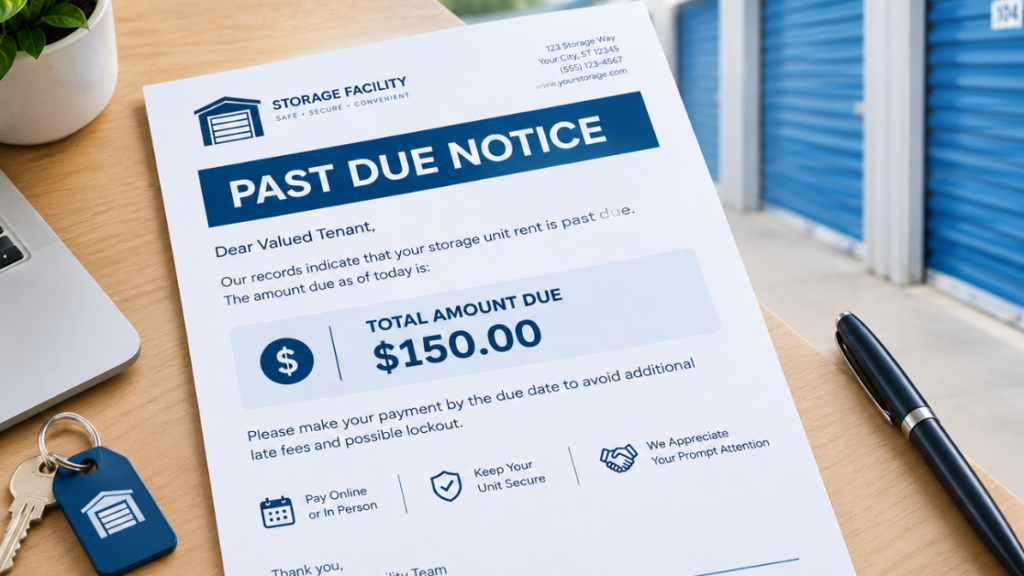
Kollecta’s self-storage collections team takes over post-auction and move-out balances, reaching out to customers respectfully and only charging if they collect. To find out what this usually costs, check out our guide on how much collection agencies charge. If you need help with earlier steps, our past due notice template for storage operators is available for your first reminder.
Frequently Asked Questions
It's the last letter a business sends before referring an unpaid account to a collection agency. It states the balance, gives a deadline and explains that the account will be referred if it isn't paid.
Often, yes. A lien sale applies the auction proceeds to the debt, but if the proceeds fall short, the remaining balance is usually still owed. Check your rental agreement and state law for how deficiencies are handled.
Many businesses give 10 to 14 days. Long enough to be fair, short enough that the account doesn't go stale.
It isn't always required, but it's good practice. It gives the tenant a last chance to pay you directly and creates a clear record for the agency.