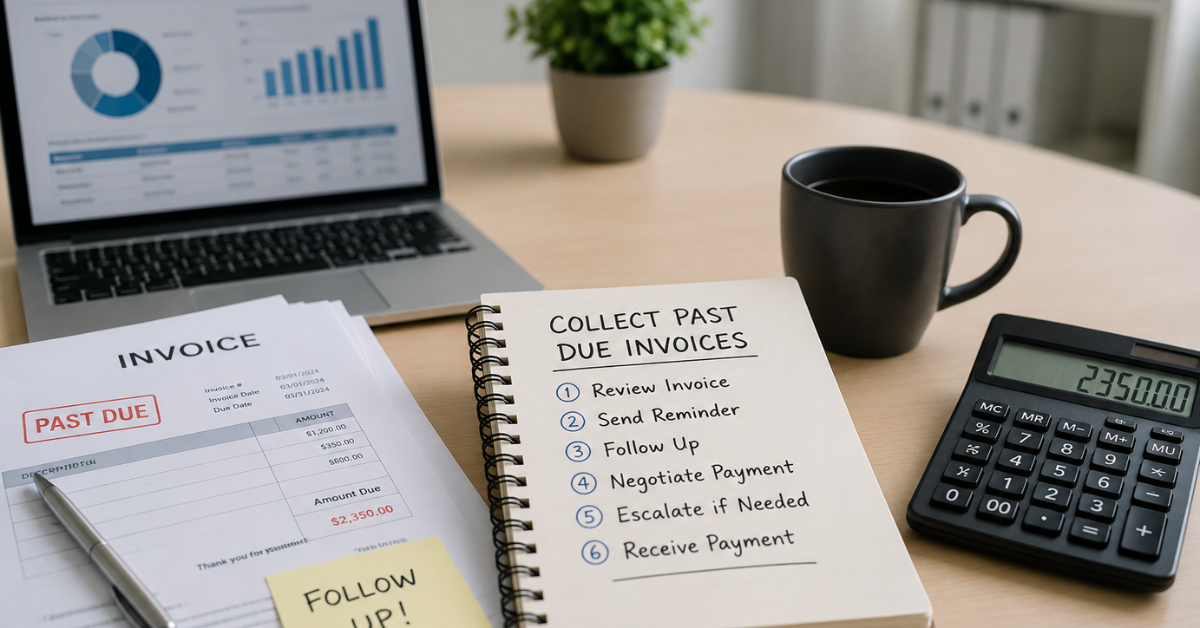
If you’re a business owner staring down a pile of overdue invoices, at some point someone tells you to “just hire a collection agency.” Simple enough, except the collections industry is full of pricing models, and some of them are set up to take your money whether or not you ever see a cent of the debt they’re chasing.
Here’s the short version: you should almost never pay a collection agency upfront. But there are specific situations where paying a fee, the right kind, structured the right way, is exactly what gets your money back faster. Knowing when it’s smart to pay a collection agency (and when it’s a warning sign) can save you thousands, and it can also protect relationships with customers you may want to keep.
Why Paying a Collection Agency Upfront Is a Red Flag
A shocking number of collection agencies still ask for money before they’ve collected anything: a “setup fee,” a “processing fee,” a “file activation cost.” This should stop you in your tracks.
Here’s why that model doesn’t hold up:
- It removes their incentive to actually collect. If an agency gets paid whether or not they recover your money, why would they work hard on the harder accounts?
- It’s often a sign of a low-quality or even predatory operation. Reputable agencies are confident enough in their process to get paid only when they perform.
- You could pay repeatedly with nothing to show for it. Businesses that hire multiple agencies over time can end up paying several “setup fees” without a single dollar recovered.
If an agency’s first ask is money before results, that’s usually your answer right there. The Federal Trade Commission’s guidance on debt collection is a useful place to check an agency’s compliance history before you sign anything.
When It Actually Makes Sense to Pay a Collection Agency
Not every fee is a red flag. There are legitimate, standard ways to pay a collection agency, and doing so, when the arrangement is structured properly, is simply the cost of doing business:
- Contingency fees. The agency takes a percentage of what they actually recover. Nothing recovered, nothing owed. This is the industry standard for a reason: it aligns their success with yours.
- Flat fees on aged or high-risk debt. For accounts that are old, disputed, or otherwise difficult, some agencies charge a modest flat rate reflecting the extra work involved, still tied to a defined scope, not an open-ended charge.
- Retainer models for high volume. Larger businesses with steady collection needs sometimes negotiate a retainer that covers ongoing account management, which can work out cheaper than per-account contingency fees at scale.
- Legal escalation costs, if a debt moves to litigation. These are separate, disclosed, and only relevant once other efforts have failed.
The pattern across all of these: you’re paying a collection agency for outcomes or clearly scoped work, not a fee just to get in the door.
How the Debt Gets Collected Matters as Much as the Price
Price isn’t the only thing that matters when you decide to pay a collection agency. How an agency collects matters just as much, because the people you’re chasing for payment are often still your customers, patients, or tenants. Aggressive, high-pressure tactics might get a short-term win and cost you a long-term relationship, a bad review, or a compliance headache. Debt collectors are also bound by federal rules like the Fair Debt Collection Practices Act, which limits abusive or deceptive tactics, so it’s worth confirming any agency you consider actually follows them.
An empathetic collection approach, one that treats the person on the other end of the debt as someone to work with rather than extract from, tends to outperform aggressive tactics over time. People are more likely to actually pay, set up a plan, and stay a customer afterward when they’re treated with respect instead of pressure.
This Is the Approach Kollecta Is Built Around
Kollecta operates on performance-based pricing: no setup fees, no charges before results. In other words, you only pay a collection agency once there’s something to show for it. But the bigger differentiator is how the collecting itself happens.
Kollecta’s process is built around empathetic, relationship-preserving communication: understanding a debtor’s situation, offering realistic payment paths, and resolving accounts without burning the relationship down in the process. For businesses, that means:
- Recovery rates that come from cooperation, not confrontation
- Customers who are more likely to keep doing business with you afterward
- A debt collections process that reflects well on your brand, not one you have to apologize for
- Transparent, contingency-based pricing so you’re never paying for effort you haven’t seen results from
If you’re evaluating agencies right now, it’s worth putting Kollecta on your shortlist, particularly if preserving customer relationships matters as much to you as getting paid.
Frequently Asked Questions
No. Reputable agencies work on contingency or clearly scoped fees tied to outcomes. If an agency asks you to pay upfront before doing any work, treat it as a warning sign rather than a standard cost of business.
Most agencies charge a contingency fee, a percentage of the amount actually recovered, often ranging from roughly 15% for high-volume business accounts up to 40-50% for small or hard-to-collect balances. Rates vary by debt age, size, and difficulty.
A contingency fee is only owed if the agency recovers money, so your interests and theirs are aligned. An upfront fee is charged regardless of outcome, which removes the agency's incentive to actually collect your debt.
For many businesses, yes. Agencies bring dedicated processes, negotiation experience, and (for consumer debts) compliance with laws like the FDCPA. If the fee is contingency-based, you generally only pay when you're already getting money back you likely wouldn't have recovered on your own.
Legitimate agencies disclose all fees upfront and stick to the agreed scope. Additional charges, like legal escalation costs, should be separate, clearly explained, and only applied once other collection efforts have failed. Unexplained add-on fees are a sign to reconsider the agency.
The Bottom Line
Don’t pay an agency just to get started. Pay one when they perform, on terms that are clear from day one. And when you’re comparing options, look past the fee structure to the approach: an agency that collects with empathy will usually get you paid without costing you the relationship on the other end of that invoice.