Deciding it’s time to hire a collection agency is the easy part. The actual process, gathering the right documentation, comparing proposals properly, and knowing what to look for in the contract, is where most businesses either move too fast or get stuck. And the contract itself is where the real cost of a decision often hides, well past the headline fee percentage.
Here’s the step-by-step process to hire a collection agency, including the parts of the agreement most guides never mention.
7 Steps to Hire a Collection Agency
Step 1: Confirm the Account Is Actually Ready
Before contacting any agency, make sure you’ve exhausted reasonable internal efforts, reminders, a direct conversation, and ideally a formal demand letter. Most experts converge on 90 days past due as the point where placement makes sense, sending an account too early risks damaging a relationship over what might just be a billing mix-up, while waiting too long steadily reduces your odds of recovery.
Step 2: Build a Complete Documentation File
An agency can only move as fast as the file you hand them. Before requesting quotes, gather:
- The original invoice, purchase order, or signed contract
- Any credit application or agreed payment terms on file
- A full record of your own collection attempts, dates, calls, emails, and what was said
- Copies of any demand letters already sent
- Complete contact information for the debtor
A thin file doesn’t make an account uncollectable, but it slows everything down and weakens your position if the account ever needs to escalate.
Step 3: Get Quotes from Multiple Agencies, and Compare the Right Number
Request proposals from two or three agencies that handle your type of debt, consumer or commercial, and your industry. When comparing quotes, resist anchoring the fee percentage alone. Ask each agency for their actual recovery rate on accounts like yours, then do the math:
Recovered amount × recovery rate = money recovered. Money recovered × (1 − fee percentage) = what you actually keep.
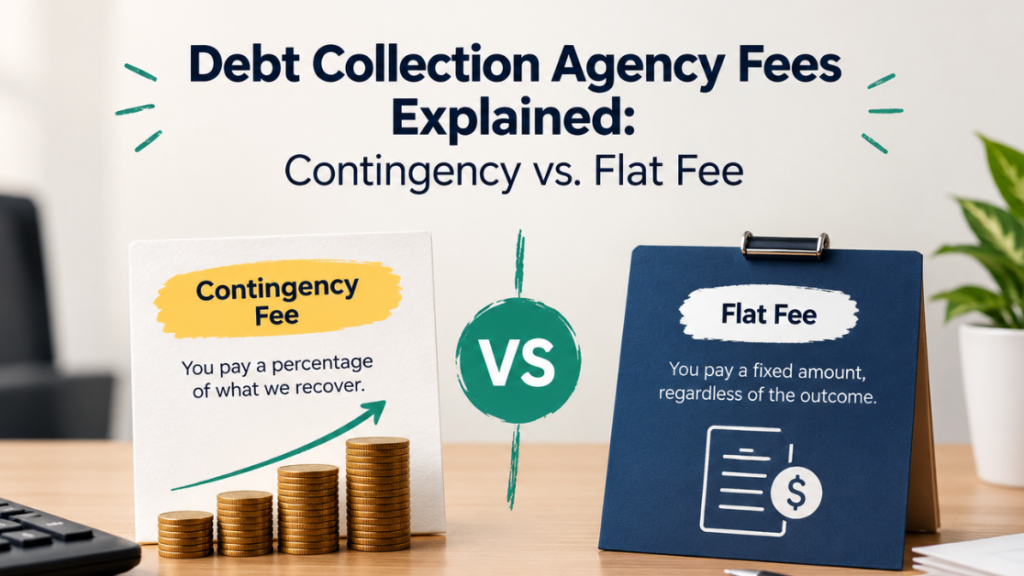
An agency quoting 25% with a strong track record on your type of debt can leave you with more money than one quoting 15% with a weak one. The fee is only half the equation, recovery rate is the other half, and most businesses only ask about the first one. This is exactly why the decision to hire a collection agency shouldn’t come down to fee percentage alone.
Step 4: Read the Contract Closely, Especially These Five Things
This is the step most guides skip entirely, and it’s where the real terms of the relationship actually live. Before signing, get clear, written answers on:
How The Fee Is Actually Calculated
Is it based on the full amount collected, including any partial payments or payment plans, or only on funds fully received? Some agencies calculate fees differently for lump-sum payments versus installment plans, which can change your effective cost meaningfully.
Clawback Provisions
If a payment is later reversed, disputed, or a settlement falls through after the agency has already been paid its fee, does the agency refund that portion, or is it yours to absorb? This is one of the most commonly overlooked terms and one of the most consequential if a payment doesn’t stick.
Cancellation and Pull-back Rights
Can you withdraw an account if you reach a resolution directly with the debtor, or if you’re unhappy with how it’s being handled? Some contracts lock accounts in for a minimum period; others allow you to pull an account at any time. Know which one you’re signing.
Exclusivity and Minimum Terms
Does the agreement require you to place all future accounts with this agency, or commit to a minimum volume or contract length? These terms are negotiable more often than businesses assume, but only if you ask before signing, not after.
What Happens If You (Or The Debtor) Settle Directly
If the debtor reaches out to you directly and pays while the account is still placed with the agency, are you still on the hook for the agency’s fee? Many contracts say yes, since the agency’s outreach may have prompted the payment, but the specifics vary and are worth confirming upfront.
None of these terms are usually deal-breakers on their own, but signing without understanding them is how businesses end up surprised by a bill, or unable to exit a relationship that isn’t working.
Step 5: Verify Licensing and Compliance Before You Hire a Collection Agency
Confirm the agency is licensed in your state and in the debtor’s state if that differs. For consumer accounts, ask specifically how FDCPA and Regulation F compliance is enforced, not just documented. For commercial accounts, confirm the agency understands that different rules apply, since B2B collections aren’t governed by the FDCPA at all. Also ask whether the agency carries errors and omissions insurance; it’s not legally required, but it’s a reasonable signal of a well-run operation.
Step 6: Submit the Account File
After the contract has been executed, send your comprehensive documents to the agency, preferably through a safe portal instead of via email. Verify that the agency has received everything necessary prior to them commencing their outreach activities. You should also make sure you know how you will be updated: through real-time portal access, scheduled updates, or an account manager. Get this in writing instead of just a verbal promise while negotiating.
Step 7: Set a Review Checkpoint
There is limited work left once an account is set up and passes to the agency, but this doesn’t mean you should completely stop monitoring it. You should set a review period some 30-45 days since a company started its work on your account and make sure it is progressing: has the agency contacted the debtor, has it proposed a payment plan, and does it provide updates like it promised during meetings? If at least one of these questions is answered negatively without an explanation, it is time to consider whether your partnership with this company is effective and productive.
Frequently Asked Questions
The evaluation and contract process can take anywhere from a few days to a couple of weeks, depending on how many agencies you're comparing. Once signed, onboarding and file submission is often fast, sometimes accounts go active within days.
It depends entirely on the contract. Some agreements allow withdrawal at any time; others lock accounts in for a minimum period. Confirm this before signing, not after you've decided you want out.
You'll need the original invoice or signed contract, any credit application or payment terms on file, a record of your own collection attempts, copies of demand letters already sent, and complete contact information for the debtor.
It depends on the agreement. Some contracts allow you to pull an account at any time, including if you resolve the debt directly with the debtor, while others lock accounts in for a minimum period. This should be confirmed in writing before signing.
Often, yes. Many contracts state that if the debtor pays you directly while the account is still placed with the agency, you still owe the fee, since the agency's outreach may have prompted the payment. This term varies by contract and should be clarified upfront.
Final Thoughts
Deciding to hire a collection agency involves much more than just comparing fee percentages. You need to know what makes an agency work, what is in its contract, and how much you would keep after such fees are paid.
Before putting accounts with an agency, do not forget to compare how well previous clients’ money has been recovered, read contracts well and confirm that the agency complies with the law. If you perform due diligence, you will not face unpleasant surprises with the help of partner providers who meet your needs.
For those companies looking for solutions to overcome overdue accounts, Kollecta is one of the best providers that work with contingency fees as well as transparent provisions and do not charge any fees beforehand at all.