If you run a business, you’ve probably had at least one invoice that never got paid on time. Maybe the client went quietly. Maybe they promised a check “next week” for three months in a row. At some point, most business owners ask the same question: should we hand this over to someone else to chase down? That’s where third-party debt collection comes in and understanding what it means can save you a lot of wasted time and awkward phone calls.
So, What Does Third-party Debt Collection Mean?
Third-party debt collection is the process of hiring an outside agency to recover money owed to you by a customer, client, or other debtor. Instead of your own staff sending reminder emails and making follow-up calls, a specialized company steps in on your behalf. They contact the debtor, negotiate repayment, and handle all the back-and-forth that most businesses would rather not deal with themselves.
The word “third-party” is the key part here. The original creditor is the first party, the debtor is the second party, and the collection agency, the outside company brought in to recover the debt, is the third party. That’s really all it means: someone who wasn’t part of the original transaction is now involved in getting it resolved.
Why Would a Business Use Third-Party Debt Collection?
Chasing unpaid invoices takes time, patience, and a certain amount of thick skin. Not every business has the staff or the stomach for it. A few common reasons companies turn to outside help:
- The debt has been outstanding for months and internal reminders aren’t working
- The business doesn’t have a dedicated collections team
- Maintaining the relationship with the customer matters, so a neutral third party feels less confrontational
- The company simply wants to focus on running its business, not tracking down late payers
- There’s also a psychological effect at play. Once a customer realizes their unpaid bill has been passed to a collection agency, it often becomes a lot more real to them. A call from an outside collector tends to get taken more seriously than a fifth email from the same vendor.
How Third-Party Debt Collection Actually Works
The process is fairly straightforward, though it varies a bit depending on the type of debt and how far past due it is.
- The account is placed with the agency. The original creditor sends over the account details, including how much is owed, when it became overdue, any prior communication with the debtor, and relevant documentation like contracts or invoices.
- The agency verifies the debt. Before any contact happens, the debt collector reviews the paperwork to confirm the amount owed and the debtor’s contact information.
- Contact begins. The agency reaches out to the debtor through calls, letters, and emails, informing them of the outstanding balance and asking for payment.
- Negotiation. It’s rare for a debtor to pay the full amount immediately. A good agency will negotiate payment plans, settlements, or timelines that actually get money moving instead of stalling indefinitely.
- Payment or escalation. If the debtor pays, the funds are usually forwarded to the original creditor, minus the agency’s fee. If the debtor still won’t cooperate, the case may be escalated further, sometimes to legal action, depending on the size of the debt and the client’s wishes.
Throughout this process, reputable agencies follow consumer protection laws, like the Fair Debt Collection Practices Act in the U.S., which sets rules around when, how, and how often a debtor can be contacted. This matters both ethically and practically, since a business doesn’t want the collector it hired creating legal headaches on its behalf.
What This Process Isn’t
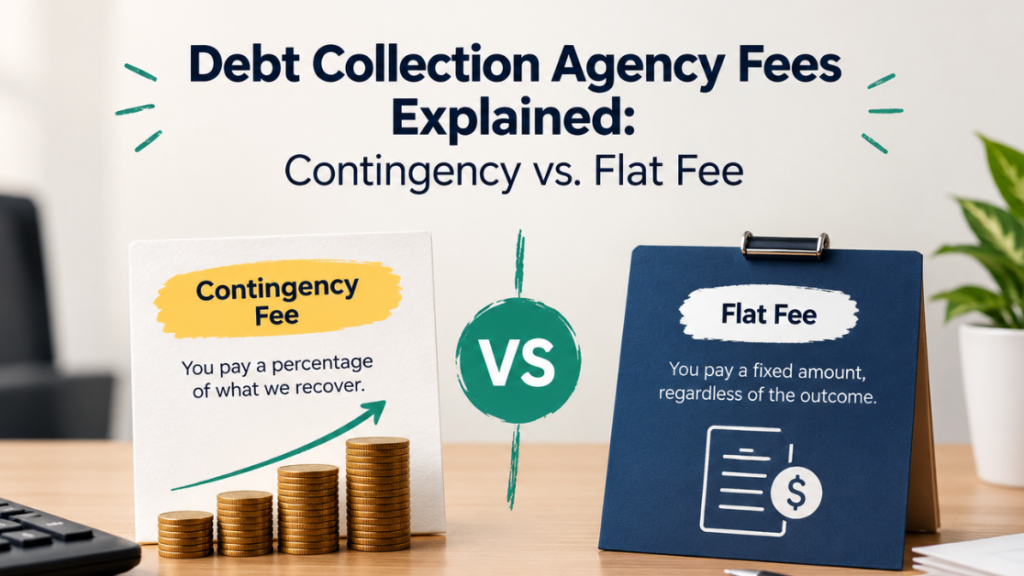
It’s worth clearing up a common misconception: hiring a collection agency isn’t the same as selling your debt. When you sell a debt, you no longer own it; the buyer does, and they collect for themselves. With third-party debt collection, you still own the debt. The agency is working on commission, usually taking a percentage of whatever they successfully recover, and the rest comes back to you.
Choosing an Agency That Actually Gets Results
Not all agencies operate the same way, and the difference shows up in results. Some rely on a handful of scripted phone calls and give up quickly. Others build a real process around persistence, compliance, and communication, and that’s where the recovery rates tend to be noticeably higher.
This is something we think about constantly at Kollecta. Rather than treating every account the same way, our approach is built around understanding why a debtor hasn’t paid and choosing a recovery strategy that fits, while staying fully compliant with debt collection regulations. Businesses come to us because chasing payments isn’t their job, and honestly, it shouldn’t have to be.
The Bottom Line
The existence of third-party debt collection is attributed to the fact that collecting money is a skill that has to be performed by professionals. This process, if done properly, frees the creditor from what is usually a burdensome task and puts the responsibility of collection in the hands of trained professionals. If you have a problem with an uncooperative customer or growing amounts of unpaid invoices, it is crucial to gain an understanding of how the whole process works.