The debt collection sector is undergoing a significant shift in decades, with an unprecedented number of advances in technology. There’s been a major change in the debt collection industry in decades, and there’s no stopping the technology now. Household debt is on the rise, the rules are getting stricter, and AI is being quickly adopted, and lenders, agencies, and financial institutions need to understand the debt collection landscape of today to keep up.
This article summarizes some of the major debt collection trends that will be key to the year 2026 and what they mean for the future of the industry.
The reasons why these trends are gaining more importance than ever in 2026.
U.S. household debt keeps on rising across most categories. Total credit card debt is over $1.21 trillion, increasing at a steady annual rate of 14.7%, and auto loans and student loans are $1.66 trillion and $1.62 trillion, respectively, with student loan repayment resuming putting strain on borrowers. Mortgage debt is still the biggest at $12.61 trillion, yet the figure has leveled off in the wake of recent rate hikes.
As a result of this changing debt environment, debt collection trends are receiving a lot of attention this year. With volume growth, squeezed margins, and an increased focus on regulatory oversight, agencies are having to re-evaluate their approach to using increased call center manpower.
Industry average agent tenure is under 18 months, leading to an increase in training costs and inconsistent service quality, adding another factor to the operators’ move towards technology rather than just increasing their headcount.
The Rise of Personalization Has Become a Key Trend
The traditional method of collections was volume-driven: more letters, more phone calls, more debtors will respond, and so on. This is no longer working well. TrueAccord reports that personalization is one of the most effective debt collection trends of the year, with consumers expecting businesses to get in touch with them at the appropriate time, channel and message.
With AI segmentation, collectors can pinpoint which channel (SMS, email, voice or chat) each person is most likely to respond to. The “slow and gentle” approach may work better for a consumer who is at the early stages of delinquency, whereas a more aggressive strategy may be required for a more advanced delinquent consumer. The subtlety is at the heart of collections strategy today as a uniform fit no longer makes sense economically.
Self-service And Digital-first Repayment
Another change that is particularly notable is the transition to simple, self-service repayment systems. Consumers want to settle their debts, but not on a specific day and at a specific time. The ability to enable debtors to initiate debt payment plans and/or payment with a portal, app or chatbot has become a competitive must have and not a nice to have. This is a self-service push, one of the most obvious debt collection trends, as it minimizes the friction for the consumer and also decreases per account servicing expenses for agencies.
Artificial Intelligence and Automation are Transforming Collections
Artificial intelligence is undoubtedly one of the largest contributors to recent trends in debt collection. According to industry statistics, AI can cut debtor coverage costs up to 70% and automate over 90% of manual work in some collection processes. On the software side, over 40% of agencies will implement AI-powered software this year, and the AI collections market will expand at a 16% to 25% rate each year.
Predictive analytics is also going mainstream: Most of the providers already use predictive models to anticipate debtor behavior, and report higher accuracy of recovery as a result. One of the lesser talked trends in debt collection is the migration of the dialer, CRM, messaging and payment solutions into a single stack, and they’re being handled remotely via the cloud and API.
Compliance-by-Design Is a Growing Priority
Strategies are still being driven by regulatory pressure. Consent rules, channel limits, disclosure requirements and voicemail standards are now automatically encoded in policy engines, and interact-audit ready with built-in. Confusing medical debt and consumer-protection rules are driving agencies to comply-first rather than comply-later workflows. Agencies like Kollecta that have built compliance into their technology from the ground up will be better equipped than those with legacy systems.
Behavioral Science and Rich Messaging
One of the newer threads in this year’s debt collection trends is the implementation of behavioral science to debt collection repayment plans, along with newer messaging options such as Rich Communication Services (RCS). The demand for convenience and self-service has always been there but with the fast pace in which technology is being adopted, consumer expectations are changing at a rate that is faster than many companies can keep pace with.
RCS gives collectors more room to interact with the message, and offer payment options and quick response actions, directly within the text thread, compared to traditional SMS. Hyper-personalized repayment plans based on real-time data are also starting to get traction as agencies are fine-tuning offers based on a debtor’s actual finances, instead of a formula, rather than a formula.
Market Growth Reflects the Pace of Change
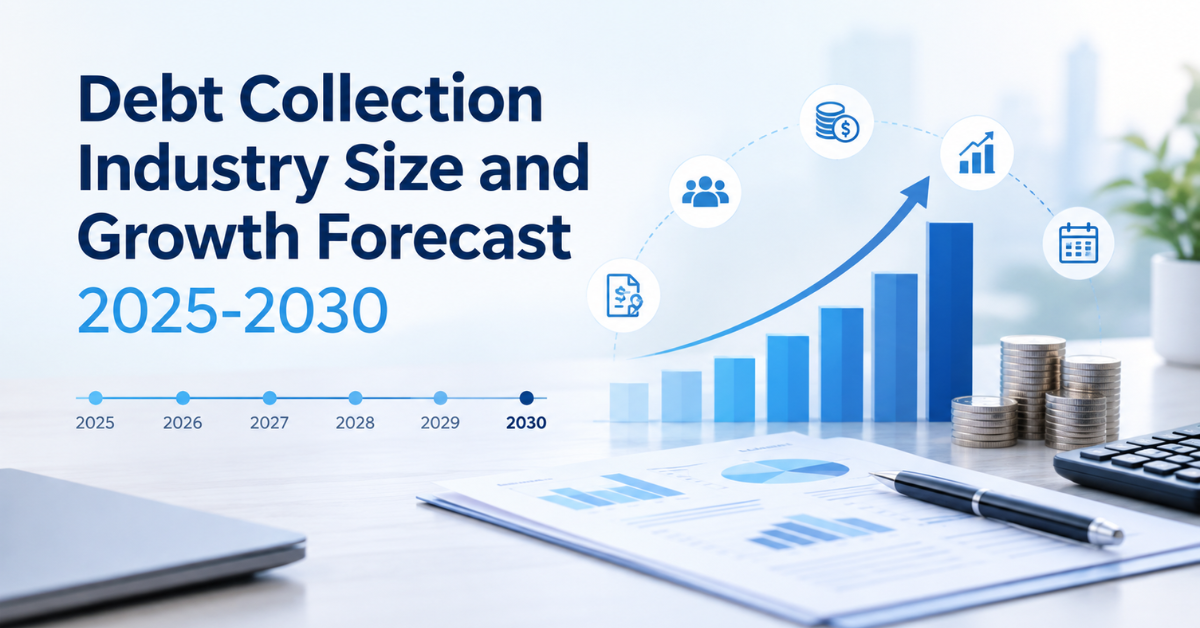
These changes are being taken very seriously, as evidenced by the amount of investment being poured into this field. The global debt collection agency market is estimated to be valued at $30.19 billion in 2025 and is expected to reach $35.32 billion by 2030 at a CAGR of 3.2%. With double-digit growth in collection tools driven by AI alone, it’s clear that this isn’t a fad, but a fundamental change in the way the industry works.
Final Thoughts on Debt Collection Trends
All these 2026 debt collection trends together demonstrate a clear direction: from high-volume, generic outreach in the debt collection industry to personalized, technology-driven, compliance-focused approaches. Agencies that are investing in AI, self-service tools and communication based on behavioral science are finding that they are outperforming agencies that continue to run call intensive models, with higher recoveries and lower costs. With household debt on the rise that includes credit cards, auto loans, and student loans, it will be important to stay on the cutting edge, or fall behind.