When a business extends credit to another company, it takes on a simple risk: the invoice might not get paid on time, or at all. Corporate debt collection is the structured process businesses use to recover money owed by other businesses and understanding how it works can save a company significant time, legal exposure, and cash flow stress.
This guide breaks down what corporate debt collection involves, the rules that govern it, the typical process, and what businesses on either side of the table should expect.
What Is Corporate Debt Collection?
Corporate debt collection is the debt collection process for unpaid business-to-business (B2B) debts, as opposed to consumer debt collection, which involves individuals. This may include payments that are unpaid, unpaid trade credit, unpaid loans, lease defaults, or payments that are in breach of contract.
Corporate debt collection often involves higher amounts, more complicated contracts, and other legal protections than consumer collections, since both are business entities. This is a vital task in sustaining a healthy cash flow and several companies either have a credit control team or outsource this to a commercial collection agency or a law firm.
How Corporate Debt Collection Differs From Consumer Debt Collection
It’s worth clarifying this distinction upfront, since the two are often confused:
- Regulation: Laws are in place to protect individuals, including consumer debt collection laws, like the Fair Debt Collection Practices Act in the U.S. There are fewer statutory protections for corporate/commercial debt collection, as businesses are presumed to be more adept at negotiating and more sophisticated than individual consumers.
- Documents: Corporate debt is typically secured by legal documents, such as contracts, purchase orders, invoices and payment terms, that provide the collectors with greater documentation to work with.
- Size and Complexity: Business debts can be large and may extend beyond a failure to pay to a disagreement over the terms of the contract, delivery, the quality of goods/services, or the extent of work.
- Relationship Stakes: Companies want to maintain continued business relationships and therefore begin corporate collection with a more diplomatic and relationship-oriented approach before escalating.
The Rules Governing Corporate Debt Collection
Corporate debt collection is not under the consumer-protection laws but it’s not a free-for-all either. There are still several legal and ethical structures to work with:
1. Contract Law
Any obligations and the timing of payment and entitlement to remedies (such as late fees or interest) are governed by the underlying agreement (the invoice terms, purchase order, or service contract). The collection action should be based on the following agreed terms.
2. Prompt Payment and Late Payment Laws
Many countries have legal provisions that deal with late payment in commercial transactions such as the UK Late Payment of Commercial Debts Act or similar legislation in the EU and elsewhere. These are frequently used in contracts that don’t specify such rates, and provide compensation for late payments when they do.
3. No Harassment or Misrepresentation
General laws prohibiting harassment, fraud and deceptive practices remain in effect, even if they don’t have the same nature as consumer protection laws. A collector may not threaten, misrepresent, or be abusive.
4. Data Protection and Privacy Laws
If collection includes personal information relating to individuals (such as contact information for company representatives), or if the sole proprietor or guarantor is an individual, there may be requirements for data protection regulations such as GDPR.
5. Statute of Limitations
After a certain time, the debts will be legally unenforceable, depending on the type and jurisdiction of debts. It is important that businesses monitor these limitation periods as there is normally no benefit in taking up collection or legal action if it is after the deadline.
6. Licensing Requirements for Collection Agencies
Third-party debt collectors are legally required to be licensed or registered in many areas. If your business is outsourcing collections, you have to check out an agency.
The Corporate Debt Collection Process
The corporate debt collection process is more likely to be a gradual one that only gets pursued beyond the point of necessity.
Stage 1: Internal Follow-Up
Most businesses will try the following before formal action: reminder email, phone call or a friendly note from accounts receivable. This phase is to work out minor errors or minor short-term cash flow problems without putting the business relationship at risk.
Stage 2: Formal Demand Letter
Once the debt is outstanding for a period of time (typically 30 to 90 days) a formal written demand is made. This letter will include the amount due, the original due date, late fees and interest, and a definite time frame for repayment before any additional action is taken.
Stage 3: Passed to a Collection Agency
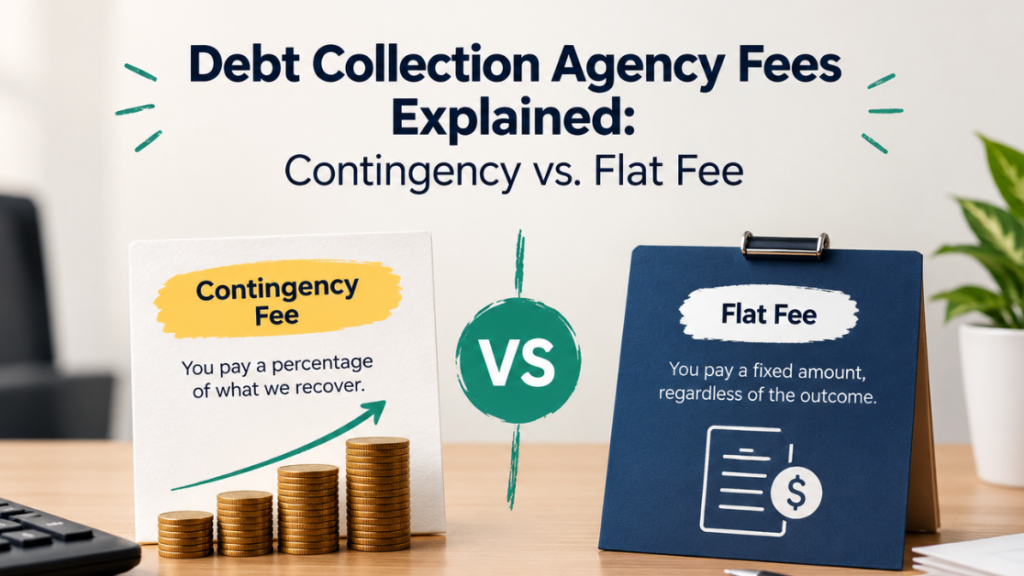
If all else fails, many companies sell the account to a third-party commercial collection agency like Kollecta that specializes in negotiating with debtor businesses. These agencies generally employ a series of escalated steps and earn money on a contingency basis (percentage of recoveries).
Stage 4: Negotiation and Settlement
It is at this stage that exploring repayment plans, part settlements, or restructured terms are common, particularly if the debtor’s firm is in genuine financial distress, and not just avoiding payment.
Stage 5: Legal Action
If negotiations are unsuccessful, the creditor can institute legal proceedings:
- Demand through legal counsel: A lawyer’s letter often carries more weight than a collection agency’s.
- Small claims or commercial court litigation: For amounts within jurisdictional limits, small claims court can be faster and cheaper.
- Full civil litigation: For larger, disputed, or complex debts.
- Judgment enforcement: If a court rules in the creditor’s favor, enforcement mechanisms like asset seizure, bank levies, or liens may follow.
Stage 6: Insolvency Proceedings
If the business is insolvent, the creditor may have to make a claim in a bankruptcy, liquidation or restructuring process, and will only receive a proportion of their debt according to their position on the hierarchy of claims.
What to Expect as a Creditor
As a creditor, you will find that you can expect a few things.
- Time investment: When the debt-recovery process is corporate, there is no instant recovery. Simple cases can take weeks to months to be resolved.
- Declining recovery over time: The longer it takes to pay off a debt the less likely it will be recovered, which is why it is important to follow it up consistently early.
- Costs: Collection agencies usually take a 15% to 35% cut of the recovered amount and if litigation is involved, the legal costs and time involved add up.
- Relationship trade-offs: When things escalate too fast, an important business relationship may be lost, and when they escalate too slowly, the sense that late payments are okay.
- Not every debt can be recovered: Some businesses you owe money to may be so broke that even if you go to court, you won’t get any of the money back.
What to Expect as a Debtor Business
- Communication is usually the best first move. Ignoring collection attempts almost always makes things worse and increases legal exposure.
- Disputes should be raised early and in writing. If the debt is contested (wrong amount, delivered goods didn’t meet spec, etc.), documenting this promptly protects your position.
- Settlement is often possible. Creditors frequently prefer a partial, timely payment over a drawn-out legal fight.
- Legal action has real consequences. Judgments can affect credit ratings, banking relationships, and future ability to secure trade credit.
Best Practices to Reduce Corporate Debt Collection Issues
- Run credit checks before extending trade credit to new business partners.
- Use clear, written payment terms on every invoice and contract.
- Send invoices promptly and follow up before debts become significantly overdue.
- Offer early payment incentives and clearly state late payment penalties.
- Keep detailed records of all communications and agreements.
- Escalate in stages rather than jumping straight to legal action.
Frequently Asked Questions
Corporate debt collection is the practice of collecting unpaid debts between two businesses, rather than between a consumer and a business, and usually involves unpaid invoices, trade credit, loans, or contractual payments.
No. There are very specific consumer-protection laws in place for consumer debt collection, whereas for corporate debt collection, it is mainly contract law, commercial laws on late payments and general laws against fraud or harassment that provide protection, and these are not as extensive.
It can take anywhere from a few weeks in simple cases to many months or longer in disputed cases or if legal proceedings are necessary.
The majority of agencies operate on a contingency fee basis, which means that they only get paid when they succeed in recovering the debt, typically between 15% to 35% of what they recover, depending on the age, size and complexity of the debt being recovered.
The creditor will usually have to make a formal claim in the insolvency, bankruptcy or liquidation proceedings and is likely to only receive a proportion of the debt depending on his or her priority compared to the other creditors.