Unpaid invoices are one of the biggest threats to cash flow for any business that sells to other businesses. Whether you’re a small supplier waiting on a single overdue payment or a finance team managing dozens of delinquent accounts, collecting commercial debt requires a structured, professional approach.
This guide walks through the practical steps involved, from the first missed payment to legal escalation, so you can recover what you’re owed while protecting your business relationships.
Why Collecting Commercial Debt Is Different From Consumer Debt
When it comes to collecting commercial debt (this refers to business debts), the regulations are different compared to consumer debt collection. B2B transactions take place with bigger invoice amounts, longer payment periods and these transactions usually result in a stable connection between two businesses. Therefore, one should find a way to be strict yet diplomatic at the same time.
Commercial debt also tends to be governed by contract law rather than consumer protection statutes like the Fair Debt Collection Practices Act (FDCPA), which mostly applies to personal debts. That said, some states have enacted commercial debt collection rules, so it’s worth checking local regulations before you begin collecting commercial debt from an out-of-state or international client.
Step 1: Review the Contract and Invoice Terms
Before taking any collection action, pull the original contract, purchase order, or invoice. Confirm:
- The agreed payment terms (Net 30, Net 60, etc.)
- Any late payment penalties or interest clauses
- The exact amount owed, including taxes or fees
- Proof of delivery or service completion
Having this documentation in order is essential groundwork for collecting commercial debt, since it strengthens your position if the dispute escalates to a formal demand or legal action.
Step 2: Send a Friendly Payment Reminder
Many overdue invoices are simply the result of oversight, not refusal to pay. Start with a polite reminder email or phone call shortly after the due date passes. Keep the tone professional and assume good faith:
- Reference the invoice number and due date
- Restate the amount owed
- Offer easy payment options (bank transfer, card, portal link)
This first step resolves a surprising number of cases without any friction.
Step 3: Escalate With a Formal Demand Letter
If reminders go unanswered after 15 to 30 days, move to a written demand letter. This is a critical step in collecting commercial debt because it creates a paper trail and signals seriousness. The letter should include:
- The total amount due, including any accrued interest
- A firm but reasonable deadline for payment
- Consequences of continued non-payment (referral to collections, legal action, credit hold)
- Send it via email and certified mail so you have proof of delivery.
Step 4: Open a Direct Conversation
In some cases, a phone call can be more effective than sending another letter. It is better to get in touch with the person responsible for accounts payable or the owner of the business to find out if there are any payment delays. Do not hesitate to ask open-ended questions to learn the cause for the delay, which can be attributed to cash flow problems, invoice disputes, or mistakes made during internal processing.
At this stage the success of your endeavors depends on finding out what is the real problem and how to solve it – a payment plan or partial payment agreement.
Step 5: Offer a Structured Payment Plan
If the debtor is willing but unable to pay in full, propose an installment arrangement in writing. Include:
- Payment amounts and due dates
- Interest or fees, if applicable
- Consequences for missed installments
A signed payment plan gives you leverage and documentation should further action become necessary.
Step 6: Involve a Commercial Collection Agency
When efforts made internally begin to falter, it is often a natural step to look for a specialized firm. Businesses that specialize in collecting commercial debts are familiar with the proper decorum between businesses, so they can persuade a company without destroying the relationship.
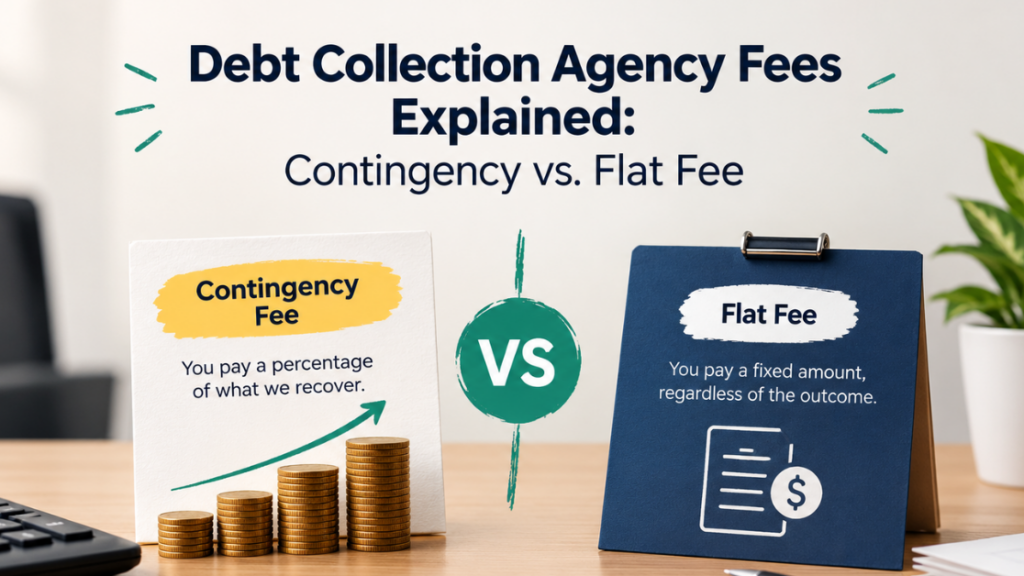
Companies like Kollecta specialize in commercial accounts and often have their own way of doing things when dealing with businesses in debt. They usually charge a contingency fee, which means that one has to pay them only after they collect the debt.
Look for an agency that:
- Is licensed and bonded where required
- Has experience in your industry
- Reports regularly on collection status
- Follows a professional, compliant approach
Step 7: Consider Mediation or Arbitration
Arbitration is a superior option when dealing with disputed debts because it is faster and cheaper than litigation. Many business contracts have arbitration clauses that require arbitration before going to court. In arbitration, a neutral third party helps the two parties settle their dispute, resulting in either a binding or non-binding agreement.
Step 8: File a Lawsuit for Larger Balances
If the amount owed is significant and other methods have failed, legal action may be your best option:
- Small claims court: Suitable for smaller balances (limits vary by state, often $5,000 to $25,000)
- Civil court: For larger, more complex commercial debts
A judgment gives you the legal right to pursue further collection tools such as wage garnishment (for sole proprietors), bank levies, or liens on business assets.
Step 9: Pursue Judgment Enforcement
Winning a lawsuit doesn’t guarantee payment. If the debtor still doesn’t pay, you may need to:
- File for a bank account levy
- Place a lien on business property or equipment
- Garnish accounts receivable owed to the debtor by their own customers
This final enforcement stage is often the most time-consuming part of the process, which is why many businesses prefer to resolve matters earlier on.
Best Practices to Prevent Future Commercial Debt Problems
- Conduct credit checks prior to providing extensive payment terms
- Request initial deposits or a fraction of the total payment from clients
- Communicate explicit payment requirements in writing clearly with clients in the invoice or contract
- Schedule timely notifications before the invoice comes due
- Keep weekly reviews of overdue payment lists in your records
Taking proactive steps prevents the need for frequent commercial debt collecting, as it encourages accurate cash flow as well as a strong bond with clients.
Final Thoughts
Collecting commercial debt barely happens at once. The process comprises a number of steps where nothing can be ignored. Thus, a clear understanding of the process lets an organization stick to the strategy of getting the money owed by its partners efficiently.