When a business does not pay you on time, that means that you have made an unsecured loan to that business without your consent. When you lend money to other businesses, your business will be unable to conduct payroll and inventory and will not be able to grow even when you are doing everything correctly in your business. B2B debt collection is the process that allows you to recover the money that is owing.
One of the most serious problems that SMEs face is unpaid invoices. A single unpaid invoice can ruin all your profits. However, the good news is that most debts can be recovered if you act quickly and appropriately. This guide covers all aspects of debt collection.
What Is B2B Debt Collection?
B2B debt collection involve debts owed to one business by another business. B2B collections are different from consumer collections, which pertain to debts owed by individuals.
These types of debts usually occur on account of a company not having paid its bills, having an overdue contract, or breached some payment terms of an agreement. Because the parties are both businesses, B2B collection cases tend to involve large amounts, complicated contracts, and the desire to maintain the working relationship.
Why B2B Debt Collection Differs From Consumer Collections
Unlike consumer collections, B2B debt collection is governed by commercial law rather than consumer protection statutes like the Fair Debt Collection Practices Act (FDCPA). This means:
- Debts are usually larger and tied to invoices or purchase orders
- Communication is typically business-to-business, not business-to-individual
- Preserving the client relationship is often a priority
- Legal remedies may include commercial arbitration or breach-of-contract lawsuits
When to Start B2B Debt Collection
Timing matters. The longer an invoice goes unpaid, the harder it becomes to recover. Most experts recommend beginning business-to-business debt collection efforts as soon as a payment is 30-60 days past due.
Signs You Need a B2B Debt Collection Agency
Consider escalating to a professional debt collection agency if you notice:
- Repeated missed payment promises
- No response to multiple follow-up emails or calls
- The debtor disputes the invoice without valid grounds
- The amount owed is significant relative to your cash flow
- Internal collection attempts have failed after 60-90 days
The B2B Debt Collection Process
A structured approach improves your chances of recovering funds without damaging the business relationship unnecessarily. Here’s how the typical B2B debt collection process unfolds.
Step 1: Internal Debt Collection Attempts
Before involving a third party, most businesses attempt internal B2B debt collection through:
- Friendly payment reminders
- Phone calls to the accounts payable contact
- Renegotiating payment terms or offering a payment plan
- Sending a formal past-due notice
Step 2: Formal Demand Letters
If informal reminders are ineffective, a formal demand letter (usually created by a lawyer) describes what is owed, when one has to pay, and what happens if one does not. This step normally solves issues before resorting to a full b2b debt collection procedure.
Step 3: Hiring a B2B Debt Collection Agency
When internal attempts to get the payment fail, turning to a specialized b2b debt collection agency is the most effective way to go. Such agencies know how to negotiate with commercial debtors and usually work on a contingency basis.
Step 4: Legal Action
If a B2B debt collection agency is unsuccessful, or if the debt is large enough to justify the cost, legal action may be necessary. This can include:
- Filing a claim in small claims court (for smaller debts)
- Commercial litigation for larger amounts
- Arbitration, if specified in the original contract
Choosing the Right B2B Debt Collection Partner
Not all agencies are equal. When evaluating a B2B debt collection partner, look for:
- Industry-specific experience (e.g., construction, healthcare, manufacturing)
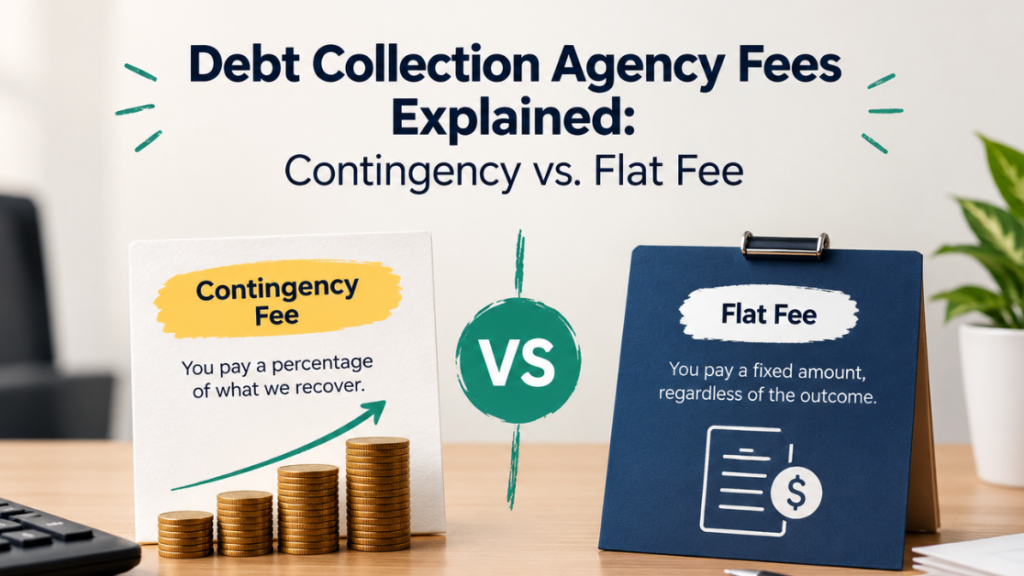
- Transparent fee structures (contingency vs. flat fee)
- A track record of maintaining professional client relationships
- Compliance with commercial collection laws in your state or country
- Clear communication and reporting throughout the process
Costs of B2B Debt Collection
Costs for debt collection vary depending on the method used:
| Method | Typical Cost |
|---|---|
| Internal collection efforts | Minimal (staff time) |
| Formal demand letter | $100–$500 |
| Collection agency (contingency) | 15%–35% of recovered amount |
| Legal action | Court fees + attorney costs (varies widely) |
Tips to Prevent Future B2B Debt Collection Issues
The best debt collection strategy is prevention. Reduce future risk by:
- Running credit checks on new business clients
- Requiring deposits or partial payment upfront
- Setting clear, written payment terms in every contract
- Invoicing promptly and following up early on late payments
- Charging late fees or interest on overdue invoices
Frequently Asked Questions
B2B debt collection refers to the collection of business debts or invoices and amounts that may be owed by one company to another. These debts may arise from contracts or other dealings between companies.
The time taken is variable, but internal collect attempts generally work within 30 to 90 days, while a B2B collection agency or lawsuit may take a couple of weeks to over one year based on the debtor's co-operation and complexity of the case.
Most collection agencies operate on a contingency fee basis and charge between 15 and 35 percent of the amount collected, but charges vary based on age and size of the debts.
Yes. If informal collection efforts and agency involvement fail, you can pursue legal action through small claims court for smaller amounts or commercial litigation for larger debts, as part of a broader B2B debt collection strategy.
In B2B debt collection, there are businesses that owe money to other businesses, and this kind of situation falls under commercial law. On the other hand, consumer debt collection includes individual consumers and is therefore governed by other laws.
Final Thoughts
Collection of outstanding payments is one of the crucial tasks in an organization. Through it you can receive funds for spending them on things like paying salaries, buying products, and expanding the company. It can be done by hiring a specialized company, contacting clients, or doing it on the company’s own. Whatever way it is done, there is one thing that is required for efficient collection of overdue accounts: a fast start and consistency. Kollecta help businesses to success in collection, recovering the sums owed to them in a never-burning-bridge-with-clients way.