The total given on the invoice relates solely to the immediate cost and does not take into account the wider effects of late payment in B2B transactions.
Cash flow is the area most affected. The Federal Reserve Banks’ 2025 Report on Employer Firms states that 51 percent of businesses reported experiencing irregular cash flow and 56 percent had difficulties with their operating expenses last year. Delayed payments drive both problems.
Administrative expenses increase due to the costs of sending reminders, making follow-up calls, and performing reconciliations. Meanwhile, Days Sales Outstanding (DSO) rises, which is a key metric for lenders, investors, and potential acquirers.
The biggest expense is usually not obvious. Money that is tied down in accounts receivable cannot be put towards hiring, inventory, or growth, and the opportunity costs in such cases rise with time.
How to Reduce Late Payments Upfront
It is more effective to take preventive action than to follow up on collections after an invoice has become overdue.
Make sure that your terms are clearly stated, indicating the date by which they are due, the methods of payment that are accepted, and any late fees in both the contract and on each invoice.
Make sure to issue your invoices quickly and correctly. Invoices that are sent as soon as work is completed are paid more quickly than those which are sent in monthly batches. Do not make billing errors since they are a common and avoidable reason for delays.
State a late fee in your terms, since even where it is never enforced it can shape how customers pay. The rules vary from state to state, and we cover the detail in how to charge interest on overdue invoices.
A small early payment discount can be worth offering, though it is worth checking the arithmetic first since the annualized cost of a discount can exceed the cost of carrying the balance.
Follow up on a fixed schedule. Predictable reminders work better than irregular ones, since clients quickly learn which communications call for action. What to do when a client won’t pay sets out how to escalate from there.
Carrying out these practices consistently sets a solid basis for effective debt collection.
When to Involve a Specialist
Internal follow-up has its limitations; if an account is more than 90 days overdue and reminders don’t work, further actions taken within the company usually end up costing more than they recover.
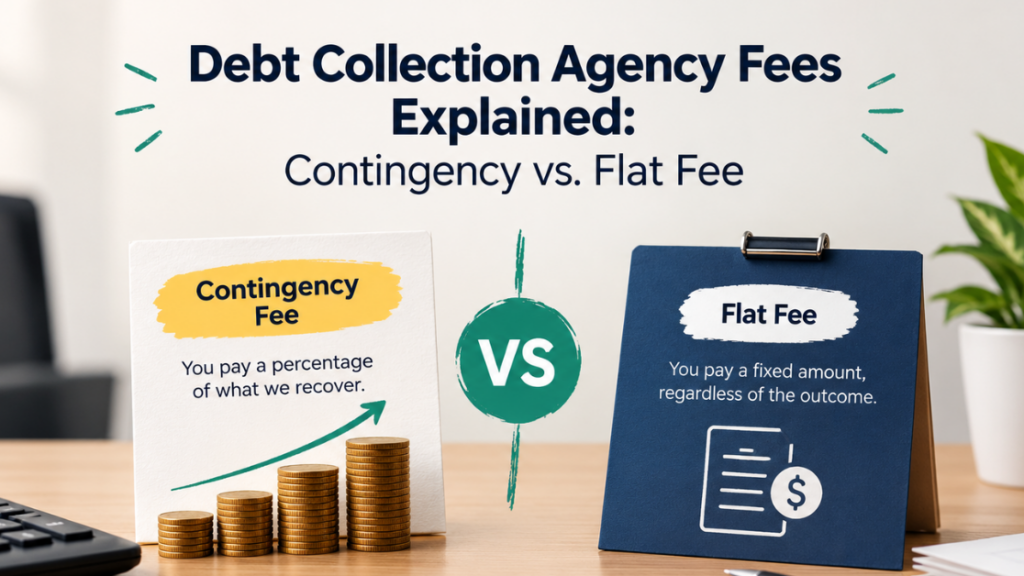
A B2B recovery partner will look after your overdue accounts. Companies such as Kollecta make use of both automated and direct communication, generally operating on a contingency basis, which means that their fee is a percentage of the amount which is recovered. This arrangement puts their interests in line with yours and helps in keeping the customer relationships.
Frequently Asked Questions
It is any invoice that has not been paid in full by the agreed date, provided that there is no written grace period; for example, an invoice is deemed to be late on the 31st day under net 30 terms. It is normal for there to be occasional delays, but if payments are frequently late this could be a sign of cash flow problems, unresolved disputes, or credit concerns which should then be looked into.
The reason why B2B customers pay late is usually because of administrative delays, for example when invoices are still waiting to be approved, or due to cash flow timing since the customers are waiting for their own payments to clear. Big buyers might deliberately delay payment in order to keep their working capital, and in some cases payment is held back even though there is no dispute. The right course of action will depend on the specific cause.
In most cases you can, provided that the contract or invoice had the rate stated before the work began and only up to the maximum limit permitted by usury laws in your state, which is why you should include a written clause relating to late fees in your terms from the beginning. In some states interest is allowed even when the agreement makes no mention of it; thus, Texas allows a creditor who never agreed a rate to charge six percent a year once a waiting period has passed, and California sets it at ten percent, and federal agencies must pay interest automatically on late payments under the Prompt Payment Act. As the rules and the usury limits vary from state to state, you should check the position in the state that regulates your contract and make sure that you include a written late fee clause in future cases.
It should do so when the invoice is more than 90 days overdue, when all internal reminders have been carried out, and when the amount still owing is sufficient to warrant the expenses involved. It is better to take action earlier since the longer a balance remains unpaid, the more difficult recovery becomes.
Bottom Line
Late payment in B2B is a natural part of selling on credit and not merely a short-term problem. Successful businesses consider prevention and follow-up to be standard practices. Healthy cash flow is dependent on clear terms, accurate invoices, and consistent procedures.
If you have a problem with late payments occurring repeatedly, Kollecta will recover the overdue B2B invoices without you having to pay anything up front, acting on a contingency basis in order to obtain payment while at the same time keeping your customer relationships.