All banks and credit institutions have experienced this situation in their business activities. An account is overdue by 30 days, then 60, then 90, and over time, the chance of recovering the money decreases. Credit collection agencies do their best to recover the money owed, but they often do so inappropriately.
This is where AI Debt Recovery changes the game. Instead of treating all past-due accounts equally, it uses data to determine who is more likely to repay and when.
In this article, we look at how AI Debt Recovery works in practice and why so many businesses are moving toward it.
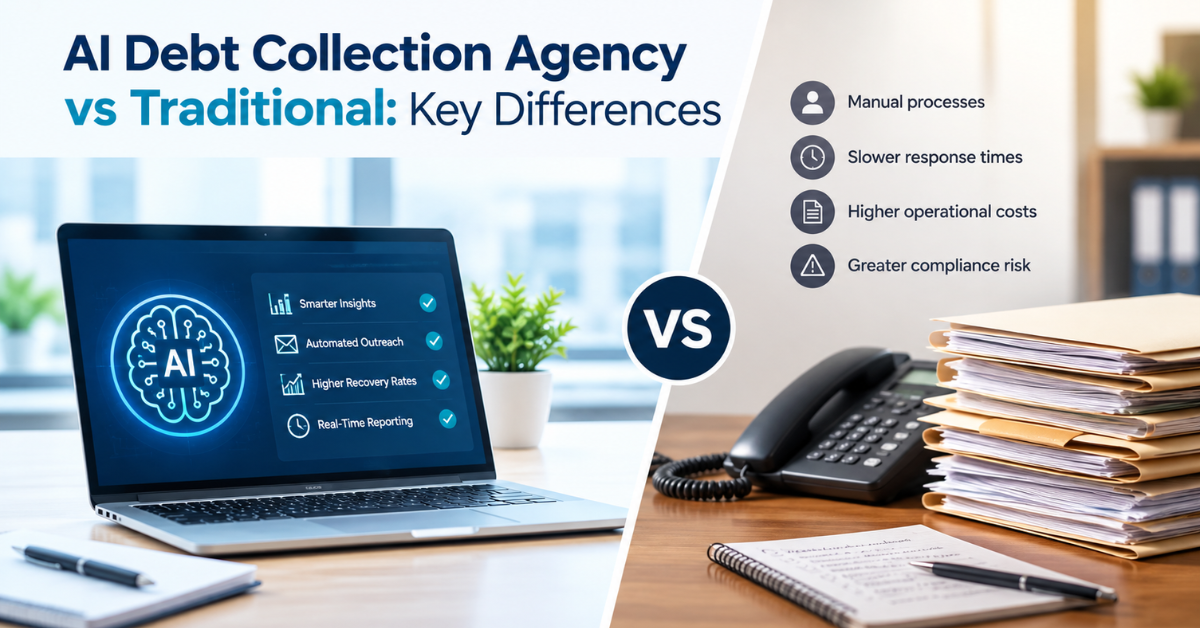
Why Traditional Collections Fall Short
Traditional collections run on fixed rules. A reminder goes out on day five, a phone call on day fifteen, a stern letter on day thirty. These schedules are easy to manage, but they ignore the person on the other end.
Some customers simply forgot and would pay the moment they received a friendly text. Others are going through a rough patch and need a payment plan, not pressure. A small group may never pay without formal action. When all three get the same script, agents spend hours on accounts that would have resolved on their own, while the genuinely difficult cases get too little attention.
There is a human cost too. Agents burn out making hundreds of calls that go unanswered, and customers grow resentful of messages that feel generic or aggressive. Both problems quietly drag recovery rates down.
How Artificial Intelligence Changes the Process
At its core, AI Debt Recovery combines machine learning, predictive analytics, and automated communication. The system studies past payment data, account behavior and engagement patterns to build a picture of each debtor. It then decides the best next step for that individual, rather than following a one-size-fits-all calendar.
A typical AI Debt Recovery platform takes care of a few core jobs:
- Evaluating accounts based on their likelihood of payment allows you to apply effort where it yields results.
- Setting the communication method, which can be SMS, email, WhatsApp, a phone call, or a payment link.
- Choosing the right time to reach out, which is when people are more likely to open the message.
- Customizing the message according to the person’s needs: be it just a reminder or a complex payment scheme.
- Gaining insight from all previous calls to make the most appropriate decision next time.
None of this replaces good judgment. It simply gives collection teams a clearer view of where that judgment is needed most.
Five Ways It Lifts Recovery Rates
1. Smarter Prioritization
Different overdue accounts should not have the same level of work put into them. Through predictive scoring technology, agents will feel the difference between the customer who only needs a phone call next week and a customer who needs a phone call today. There will be no time wasted on customers who are easy to win back.
2. Reaching People When They Will Respond
An email at 10 am on Tuesday could mean nothing, while the same email sent at 7 pm on Friday might get an immediate answer. AI Debt Recovery can time its outreach using actual statistics to reach more customers in a timely manner.
3. Messages That Feel Personal
People react better to messages that look like they were written for them personally. In order to achieve this, the system can use different types of messages based on a customer’s profile. Long-time customers who have missed one payment get a gentle reminder rather than a harsh warning.
4. Easy, Flexible Ways to Pay
A lot of debt remains unpaid because making repayments appears difficult or unaffordable. Self-service websites, payment links, and options for installment payments allow clients to make payments how they want with minimal contact. Making payments easy is one of the quickest ways of turning intention into payment.
5. Constant Improvement
Every reply, ignored message and completed payment feeds back into the model. As time passes, businesses that use AI Debt Recovery see that they improve overall processes and become more effective.
Better for Customers and for Compliance
Some believe automation makes the collections process impersonal. While it’s true that AI Debt Recovery means customers will be contacted less often and in a more personal way. People are not fond of being pursued, although most prefer being treated with respect.
Compliance is another benefit of automation. Laws regulating contact hours, call limits, required disclosures, and data privacy are very strict. Any error can lead to serious consequences. Automated platforms can detect and correct errors automatically.
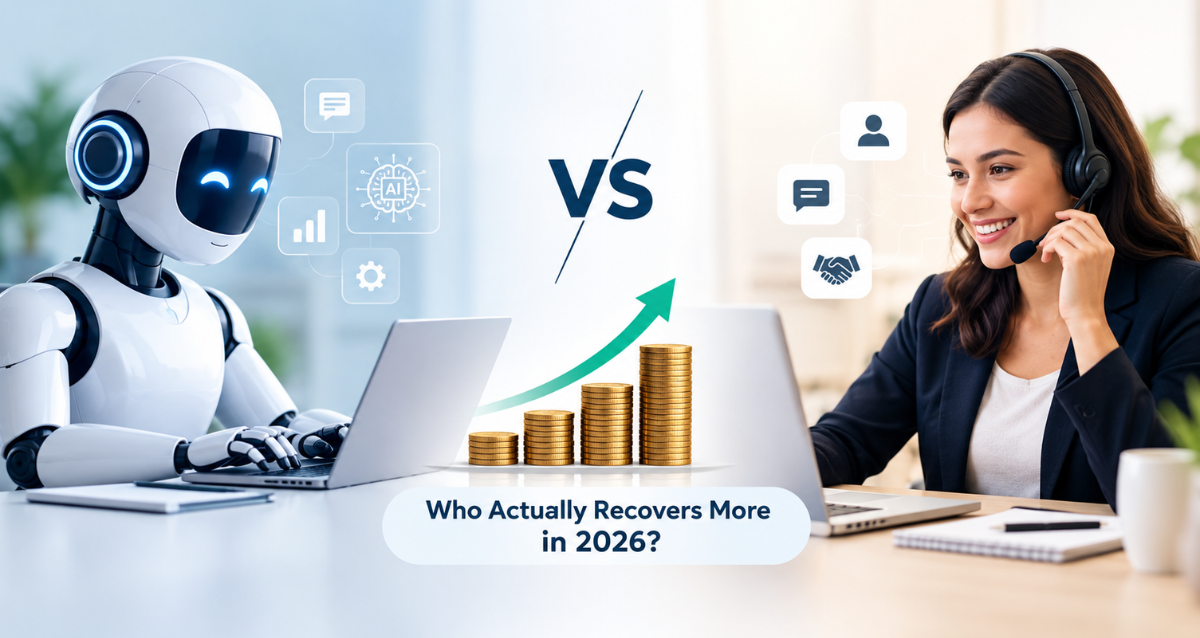
At the same time, the most advanced AI debt recovery systems don’t eliminate human involvement from the process. Instead, the technology manages the workflow, while live operators handle complex cases or customers facing serious repayment difficulties.
Getting Started the Right Way
Switching to AI Debt Recovery doesn’t mean changing everything at once. Successful enterprises take a simple step:
- Clean up your data; predictions are effective only if they are based on reliable payment history and contact information.
- Set objectives by deciding whether recovery rate, speed, cost per collection, or customer satisfaction matters most.
- A pilot project should be launched. Choose a specific segment to test the solution so the new system can be studied effectively.
- Use human factors, as some cases must go through an agent.
- Monitor results monthly.
Final Thoughts
Debt collection will always involve challenging conversations. But guesswork no longer needs to drive the process. AI helps agencies focus on the right accounts, reach people at the right time, and offer realistic repayment options. With AI debt recovery, businesses can improve collections while protecting the relationships they worked hard to build. Agencies like Kollecta combine technology with a human approach to make debt recovery smarter, more efficient, and more respectful. For companies facing rising debt, now is the time to rethink their collection strategy.