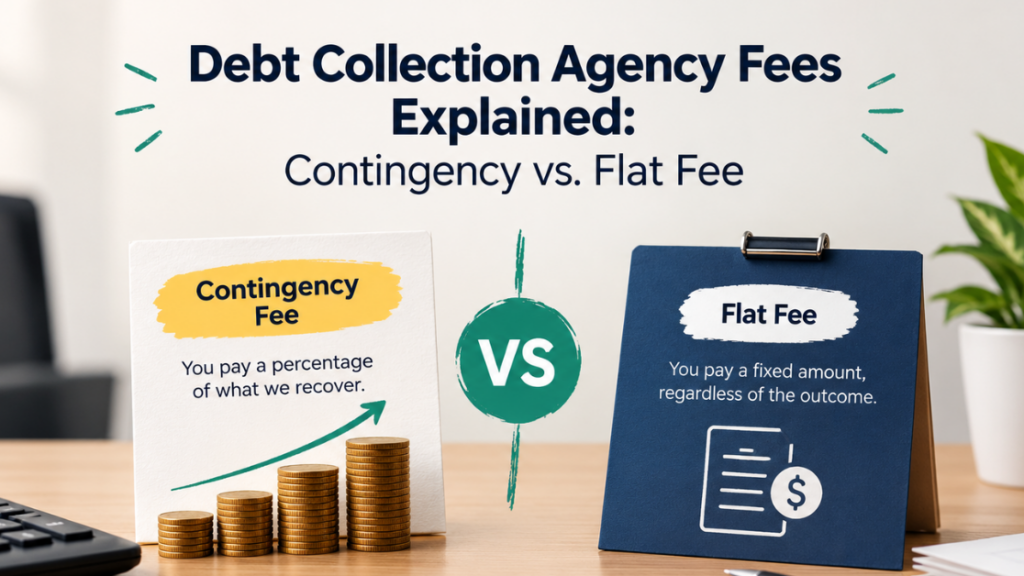
At some point, all businesses have to grapple with a complicated dilemma when it comes to remitting overdue payments: whether to take care of the collection of outstanding debts internally or outsource the collections process to a specialized company. This dilemma brings to the fore the First-party vs. Third-party Collections debate, when the best decision can have a considerable impact on the company’s cash flow, relationships with customers, and the brand’s reputation for many years.
This article will provide extensive analysis of both approaches along with their pros and cons.
What Is First-Party Collections?
First-party collections happens when a business collects overdue payments directly from its own customers, using its own staff or an internal team operating under the company’s name. The relationship never technically changes hands. The original creditor remains the one contacting the debtor.
Think of a hospital billing department calling a patient about an unpaid invoice, or a subscription company’s customer service team reaching out about a lapsed payment. That’s first-party collections in action.
Key characteristics of first-party collections:
- The original company retains the relationship and the debt
- Communication is usually softer, framed as account management rather than debt recovery
- Often handled earlier in the delinquency cycle (30-90 days past due)
- Governed primarily by the company’s own policies, though still subject to consumer protection laws
What Is Third-Party Collections?
Third-party collections involves outsourcing unpaid debts to an external collections agency. The agency works on behalf of the original creditor (or sometimes purchases the debt outright) and takes over communication with the debtor.
This is the classic image people have of “collections”: a specialized agency, often operating under a different name, calling or writing about a debt that’s typically 90+ days past due.
Key characteristics of third-party collections:
- A separate, licensed agency manages recovery efforts
- Subject to strict regulations like the Fair Debt Collection Practices Act (FDCPA)
- Usually engaged after internal efforts have failed
- Compensation is often commission-based (a percentage of what’s recovered)
Modern agencies have also shifted away from the old stereotype of aggressive collection calls. Providers like Kollecta combine AI-driven engagement with compliance-first processes, aiming to recover outstanding balances while still protecting the client’s brand and customer relationships.
First-Party vs. Third-Party Collections: Core Differences
| Factor | First-Party Collections | Third-Party Collections |
|---|---|---|
| Who collects | Your internal team | An outside agency |
| Relationship with customer | Preserved, ongoing | Often strained or ended |
| Regulatory exposure | Moderate | High (FDCPA, state laws) |
| Cost structure | Fixed (salaries, tools) | Contingency fees (often 15–50%) |
| Best used for | Early-stage delinquency | Late-stage or written-off debt |
| Brand control | Full control | Limited control |
Understanding First-Party vs. Third-Party Collections at this structural level helps clarify why most businesses eventually use a blend of both rather than committing to one exclusively.
Pros and Cons of First-Party Collections
Pros
- Preserves the customer relationship and brand voice
- Lower cost per recovery since no commission is paid to an outside agency
- Faster response time since there’s no handoff delay
- More control over tone, timing, and payment plan flexibility
Cons
- Requires dedicated staff, training, and compliance oversight
- Recovery rates tend to drop the longer debt is aged
- Can strain internal resources if delinquency volume grows
- Customers may not take internal reminders as seriously as an agency notice
Pros and Cons of Third-Party Collections
Pros
- Specialized expertise and negotiation tactics
- Access to legal remedies and skip-tracing tools
- Frees up internal staff to focus on active customers
- Often more effective on older, harder-to-collect debt
Cons
- Commission fees eat into recovered revenue
- Risk to brand reputation if the agency uses aggressive tactics
- Less control over how customers are treated
- Compliance risk if the agency violates regulations (creditors can still be liable)
How to Decide: First-Party vs. Third-Party Collections for Your Business
The right choice in the First-Party vs. Third-Party Collections decision usually comes down to a few practical questions:
- How old is the debt? Fresh delinquencies respond well to first-party outreach. Debt older than 90–120 days often needs the leverage a third-party agency provides.
- How important is the customer relationship? B2B companies or subscription businesses with repeat customers often lean first-party to avoid damaging goodwill.
- What’s your internal capacity? If your team is already stretched, outsourcing to a third party may be more cost-effective than building an internal collections function.
- What’s your risk tolerance? Third-party collections carries more regulatory exposure, even though the agency does the work, since creditors can still face liability for an agency’s misconduct.
- What’s your budget structure? If cash flow is tight, contingency-based third-party fees may be more attractive than the fixed costs of an internal team.
A number of firms have begun to adopt a hybrid approach whereby they handle delinquency internally via a first-party method at first, after which the case is handed over when it reaches a certain age or amount to a collection agency. The benefit of using this process is that it combines both the advantages of first-party collections with those of third-party collections.
Final Thoughts
The question regarding whether First-Party Collections are better or Third-Party Collections is not simply answered because there is no one correct answer. The correct answer is more dependent upon the business sector, clients, debts, and in-house resources available. Many companies use both types of collection at different points in time, thinking less of the decision as an either-or choice but rather as a collection continuum.
Before deciding on a collection type, make sure to evaluate your collection efficiency, calculate your specific costs of collection, and see if your relationship with your clients is capable of enduring third-party collections.