Every small business owner eventually runs into the same painful problem: you’ve delivered the work or the product, the invoice is sitting unpaid, and the client has gone quiet, or worse, is actively refusing to pay. Understanding small business debt recovery isn’t just a legal nicety; it’s essential to protecting your cash flow and keeping your company alive.
This guide walks through what to do when a client refuses to pay, and how to approach small business debt recovery without burning bridges or wasting money you don’t have.
Why Small Business Debt Recovery Matters So Much
Unlike large corporations with deep reserves, small businesses often operate on thin margins. A single unpaid invoice of a few thousand dollars can mean the difference between making payroll and missing it.
That’s why small business debt recovery deserves a proactive strategy rather than a reactive scramble after the fact. Late or unpaid invoices are one of the most common reasons small businesses fail, which makes having a clear recovery process just as important as landing the client in the first place.
Step 1: Confirm the Facts Before You Act
Before diving into any small business debt recovery effort, make sure your own paperwork is solid. Pull together:
- The signed contract or service agreement
- The original invoice and any revised versions
- Proof of delivery (emails, shipping confirmations, project sign-offs)
- A record of all prior communication about payment
If any of this is missing or vague, it will weaken your position later, whether you’re negotiating directly or escalating to a collections agency or small claims court.
Step 2: Reach Out Directly and Professionally
Most small business debt recovery situations resolve at this stage. A firm but polite phone call or email often uncovers the real issue: a lost invoice, a cash crunch on their end, or a dispute over the quality of work. Keep records of every interaction, and always follow up verbal conversations with a written summary so there’s a paper trail.
Sample language for a follow-up email:
“I wanted to follow up on invoice #1042, which is now 30 days past due. Please let me know if there’s an issue with the deliverables, or if there’s a payment plan we can arrange.”
Step 3: Send a Formal Demand Letter
If polite reminders don’t work, the next stage of small business debt recovery is a formal demand letter. This document should:
- State the amount owed and the original due date
- Reference the contract terms that were violated
- Set a firm deadline for payment (typically 10 to 14 days)
- Note the consequences of continued non-payment (collections, legal action, credit reporting)
A demand letter carries more weight than an informal email because it signals you’re prepared to escalate, and it often gets clients to finally engage.
Step 4: Consider a Collections Agency
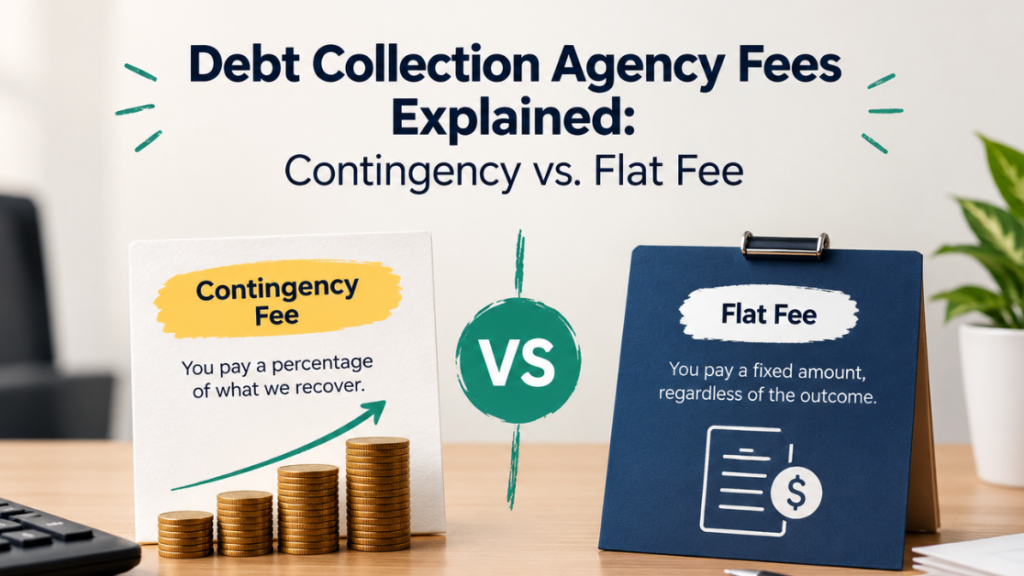
When direct efforts fail, many small businesses turn to a third-party collections agency to handle small business debt recovery on their behalf. Agencies typically work on a contingency basis, taking a percentage of whatever they recover, often 15% to 50%, depending on the age and size of the debt.
Agencies like Kollecta specialize in pursuing overdue commercial invoices on behalf of small businesses, combining persistent follow-up with a process designed to preserve the client relationship where possible. This route can be worth it for invoices you’d otherwise write off entirely, since agencies have the tools and persistence to pursue non-paying clients more aggressively than most owners have time for.
Step 5: Explore Small Claims Court
For debts within your state’s small claims limit (often $5,000 to $25,000 depending on jurisdiction), court can be a cost-effective small business debt recovery option. You typically don’t need a lawyer, filing fees are low, and cases move relatively quickly. Bring your contract, invoices, and communication records as evidence, the same documentation you gathered in Step 1.
Step 6: Know When to Write It Off
Not every debt is worth chasing. If the cost of pursuing small business debt recovery, whether in time, legal fees, or agency commissions, exceeds the amount owed, it may be smarter to write it off and claim it as a bad debt deduction on your taxes. This is a business decision, not a moral one: sometimes the most financially sound choice is to move on and focus energy on paying clients.
Preventing Future Payment Problems
The best small business debt recovery strategy is one you rarely need to use. Reduce future risk by:
- Requiring deposits or partial upfront payment on larger projects
- Running credit checks on new B2B clients
- Using contracts with clear late-payment penalties and interest clauses
- Setting up automated invoice reminders before due dates
- Offering multiple easy payment methods to remove friction
Final Thoughts
Dealing with a client who refuses to pay is frustrating, but a structured, professional approach to small business debt recovery protects both your finances and your reputation.
Start with direct communication, escalate methodically through demand letters and collections agencies such as Kollecta if needed, and know when it’s time to cut your losses. With the right systems in place, you can minimize how often you need to rely on debt recovery at all.